

Uncategorized
How to Diagnose a Washing Machine Won’t Drain
Jan
Washing Machine Won’t Drain
A washing machine that refuses to drain is one of the most common appliance faults in UK homes. The good news is that most drainage issues are simple to diagnose — and often even simpler to fix. Before calling out an engineer, you can run through a few checks to pinpoint the cause.
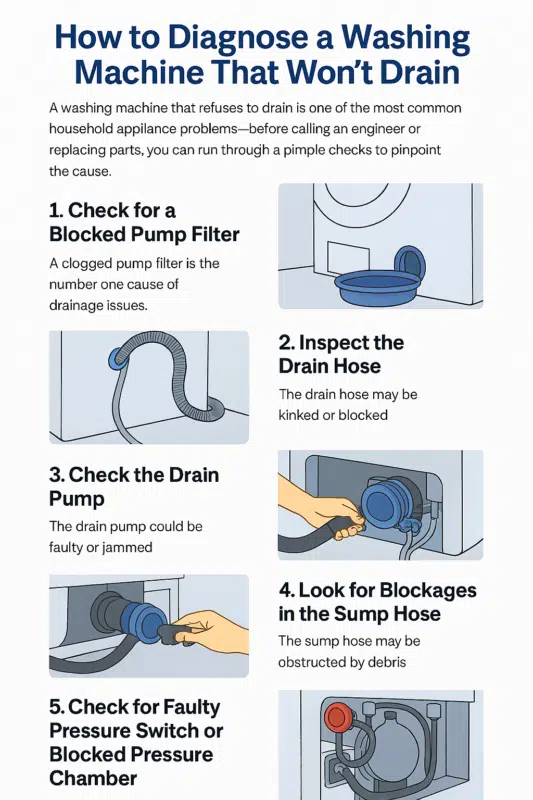
The visual above gives you a quick overview of the key areas to inspect. Below is the full step‑by‑step guide.
1. Washing Machine Won’t Drain?
Check for a Blocked Pump Filter
A clogged pump filter is the number one reason a washing machine won’t drain.
Common Symptoms
- Water left in the drum
- Machine stops mid‑cycle
- Drain‑related error codes
- Strange noises during draining
How to Check
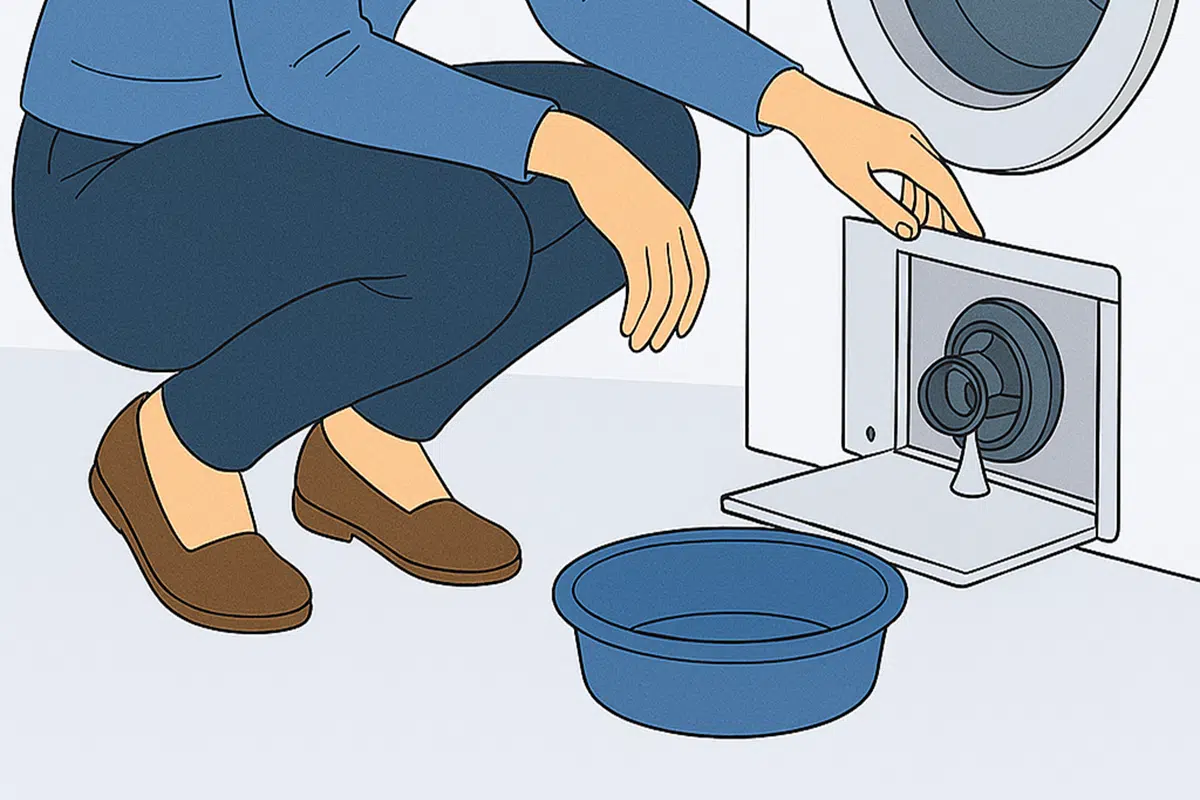
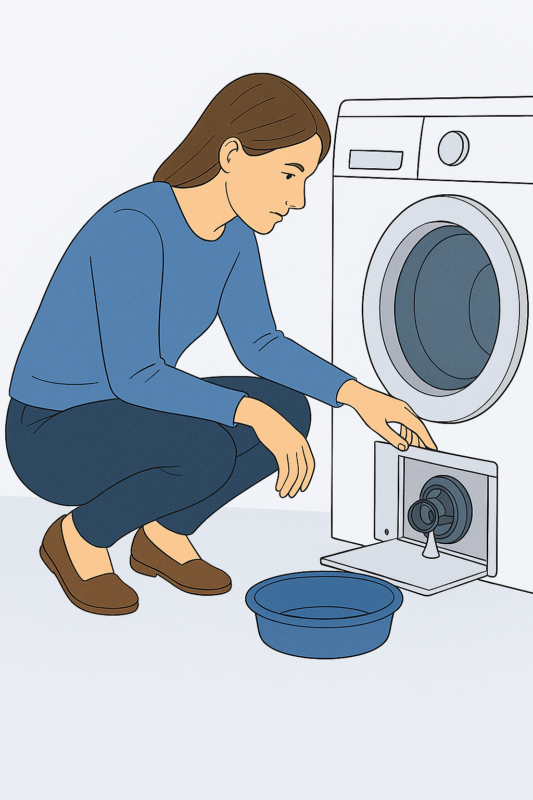
- Open the pump filter flap at the bottom front of the machine.
- Place a tray or towel underneath — water will spill out.
- Unscrew the filter and remove debris such as coins, lint, hair, or small clothing items.
- Check the pump impeller behind the filter. It should spin freely.
If the impeller is stiff or jammed, the drain pump may need replacing.
2. Inspect the Drain Hose for Kinks or Blockages
The drain hose carries water from the machine to your waste pipe. If it’s blocked or bent, the machine can’t drain properly.
What to Look For
- Hose crushed behind the machine
- Sludge build‑up inside the hose
- Incorrect installation height (should be 65–100cm)
How to Diagnose
- Pull the machine forward and visually inspect the hose.
- Detach it from the waste pipe and check for blockages.
- Blow through the hose — if air can’t pass, it’s blocked.
A damaged or heavily clogged hose should be replaced.
3. Check the Drain Pump
If the filter is clear but the machine still won’t drain, the pump itself may be faulty.
Signs of Pump Failure
- Loud humming noise during draining
- No sound at all
- Machine stops and displays a drain error
- Burning smell (electrical fault)
Diagnosis
- Run a drain cycle and listen for pump activity.
- If the pump hums but doesn’t spin, the motor may be seized.
- If silent, the pump may have failed electrically.
Drain pumps are inexpensive and easy to replace on most models.
4. Look for Blockages in the Sump Hose
The sump hose connects the drum to the pump and often traps:
- Socks
- Coins
- Buttons
- Excess detergent sludge
How to Check
- Unplug the machine.
- Access the sump hose from underneath or behind the machine.
- Remove the clamp and inspect the hose for obstructions.
- Clean thoroughly before refitting.
This is one of the most common causes of drainage issues in households with small children’s clothing.
5. Check the Pressure Switch & Pressure Chamber
The pressure switch tells the machine how much water is inside. If it’s blocked or faulty, the machine may think it’s still full and refuse to drain.
Symptoms
- Machine won’t drain or spin
- Incorrect water levels
- Random error codes
Diagnosis
- Inspect the thin pressure hose for blockages or splits.
- Blow through the hose — it should be clear.
- If the switch doesn’t click when blown into, it may need replacing.
6. Inspect the Household Waste Pipe
Sometimes the problem isn’t the washing machine at all.
Check for:
- Slow sink drainage
- Gurgling noises
- Backflow into the washing machine
If your sink or dishwasher also drains slowly, the blockage is likely in the main waste pipe.
7. Reset the Machine
Modern washing machines can stop draining due to software glitches.
Quick Reset
- Turn the machine off
- Unplug for 5 minutes
- Restart and run a drain cycle
This resolves many temporary faults.
When to Replace Parts
If your diagnosis points to a faulty component, the most common replacements are:
- Drain pump
- Drain hose
- Sump hose
- Pressure switch
- Door lock (if machine won’t enter spin cycle)
All of these parts are widely available and affordable.
Final Thoughts
A washing machine that won’t drain is frustrating, but most causes are simple to identify with a few basic checks. By following the steps above — and using the visual guide included — you can quickly narrow down the issue and decide whether a DIY fix or a replacement part is needed.
