
How to Tell if Your Fan Oven Element is Blown (Step-by-Step).
Written by Terry (The Cooker Repair Man) | Appliance Spares Expert
Is your electric fan oven turning on, the light illuminating, and the fan spinning, but the air blowing inside stays completely cold? As a domestic repair engineer with over 38 years of experience fixing cookers across Greater Manchester, I see this issue almost daily. It is the classic symptom of a Blown Fan Oven Heating Element.
In this guide, I will walk you through the three easiest visual and technical checks to confirm your element has failed, and how to safely source the exact replacement part to get your kitchen running smoothly again.
Diagnosis Step 1: Look for Visual Red Flags
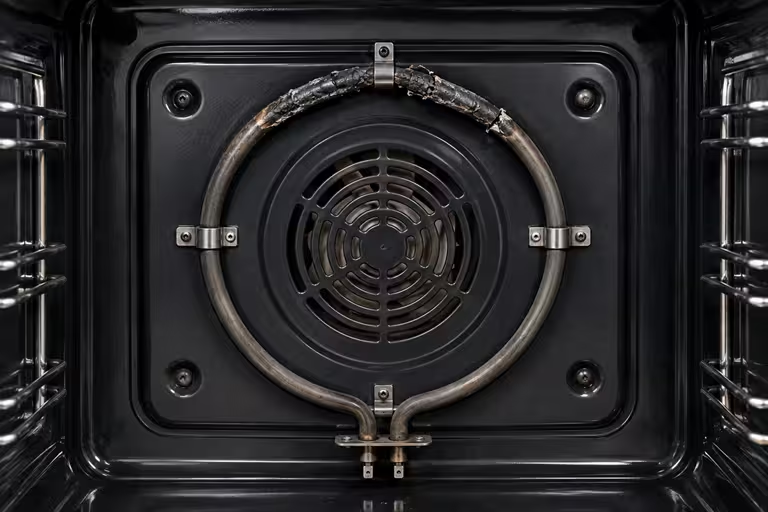
The most common way a circular oven element fails is by physically bursting, causing an immediate break in the electrical circuit. Before unscrewing anything, you can often spot the damage through a quick visual scan:
- Ensure the oven is completely turned off and isolated safely at the main kitchen wall control switch.
- Open the oven door and peer through the small holes of the rear back panel plate.
- Shine a torch inside and look closely at the circular ring surrounding the fan blade. If you spot a bright blistered mark, a physical split in the metal casing, or a black charred spot, the element has definitely blown and needs to be replaced.
Diagnosis Step 2: Test for Continuity with a Multimeter
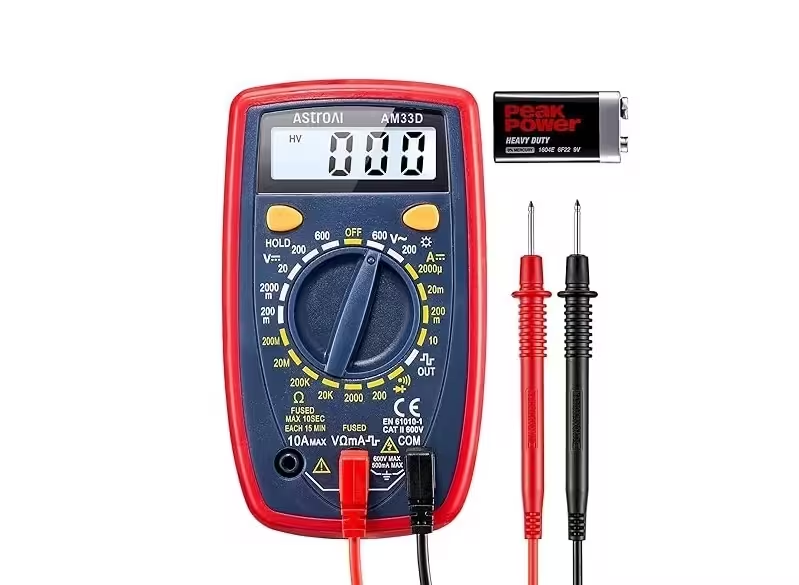
If there are no obvious burn marks or splits on the outer casing but the oven is still blowing cold air, you can verify if the internal electrical wire filament has snapped using a simple multimeter test:
- Safe isolation is critical: Disconnect the appliance from the mains power supply completely before opening any protective coverings.
- Remove the rear inside backplate holding screws to completely reveal the element terminals. Remove the screws that secure the element and remove the element, taking care not to let the wires fall into the back of the oven
- Set your digital multimeter to the low Ohms (Ω) resistance setting.
- Place one testing probe on each of the two main electrical terminals of the element.
- Reading a Healthy Element: A working fan element will show a stable resistance reading between 20 and 30 Ohms.
- Reading a Blown Element: If your multimeter display screen shows
OL(Open Loop), 1 (infinity), or moves erratically, the internal wire loop has snapped. The element is dead.
🚨 Need a Replacement Fan Oven Element?
If your element has a physical burn hole or completely failed your Multimeter continuity check, a replacement component will get your appliance heating again.
Avoid the returns hassle: Oven elements look incredibly similar but vary slightly by specific wattage requirements, diameter sizes, and mounting brackets. Make sure to double-check your appliance’s exact model number (found printed on a data label sticker inside the oven door rim or along the frame) before searching our partner store to ensure 100% component compatibility.
Diagnosis Step 3: Check for a Tripped Consumer Unit
Frequently, when a fan element blows, it causes a major short circuit that instantly trips your home’s main fuse box (RCD breaker). If your entire oven completely lost power, display clock lights included, at the exact moment it stopped heating, head to your consumer unit. Verify if your cooker circuit switch clicked down to the “OFF” position, and reset it after isolating your cooker components.